

But the fruit of the Spirit is love, joy, peace, patience, kindness, goodness, faithfulness, gentleness, self-control; against such things there is no law. (Galatians 5:22-23)


Provincial Message
Witnesses to the Radical Demands of the Gospel
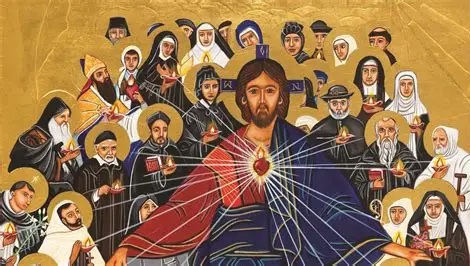
As we celebrate All Saints’ Day and All Souls’ Day, remember our deceased benefactors and members of the Salesian Family on 5 November, and commemorate the 170th death anniversary of Venerable Mamma Margaret on 25 November, we are reminded of our call to holiness and our hope in eternal life. The faith and sacrifices of those who have gone before us challenge us to live our vocation with greater fidelity and conviction. The commemorations mentioned above invite us to pause, examine our lives, and rediscover what is essential to our consecration. Our concern must go beyond what we accomplish to the persons we are becoming and the witness we offer to the young and the Church. The radical demands of the Gospel become credible not merely through our works, but through lives transformed by Christ.
Returning to the Heart of Our Vocation
“If we do not live what we believe, then slowly we shall begin to believe what we live.” These words of Fulton Sheen challenge us to examine whether our choices, relationships, and apostolic commitments reflect the faith we profess and the consecration we have made. The radical demands of the Gospel call for coherence between what we proclaim and how we live. As a Province, we have much to thank God for: the gift of vocations, our institutions dedicated to the young, our service to those on the peripheries, and the generosity of our confreres. Yet gratitude must be accompanied by honesty. We must guard against self-sufficiency and self-reference, becoming more concerned with achievements than with authentic witness, efficiency than with effectiveness, and numbers than with the depth of our proclamation. We may teach without learning, give without receiving, and speak without listening. Our ministry then risks becoming a duty rather than an expression of love for Christ and the young. In Evangelii Gaudium (26-28), Pope Francis calls us to renew our evangelizing mission from within. We are not called merely to maintain structures or accomplish tasks, but to share the joy of the Gospel. This is possible only when that joy is alive in us. Even religious life can be infected by the world’s pursuit of achievement, possessions, recognition, and influence. Pope Francis warns against pastoral self-reliance that forgets the primacy of God’s grace. A radical Gospel witness begins when Christ, rather than our achievements, becomes the center of our identity and mission.
Recovering Our Interior Life
We live in a world increasingly shaped by technology and a technocratic mentality. Digital platforms and artificial intelligence influence our habits, relationships, and decisions, often competing for our attention. Technology is not the enemy; the challenge is to remain inwardly free enough to use it wisely. A consecrated Salesian must be free from whatever weakens his communion with God and his availability to the young. Reports from the Dicastery for Institutes of Consecrated Life and Societies of Apostolic Life published in the year 2019 revealed that 1,600 consecrated religious left consecrated life and they had identified three causes for leaving, namely, crises of faith, community life, and affectivity among the significant challenges. These remind us that vocation cannot be sustained by organisation and activity alone. We often justify neglecting prayer by citing demanding apostolates and hectic schedules. While these pressures are real, we must honestly examine whether we have allowed work to displace God from the centre of our lives. Prayer is not an interruption of the mission; it is its source. It renews our vocation, purifies our intentions, and restores our priorities. Without interior freedom and a living relationship with God, even generous service can lose its spiritual depth. The radical demands of the Gospel require us to resist the distractions that fragment our lives and to reclaim the silence, discipline, and prayer that make us available to God and others.
Consecrated Life: A Relationship with God
The quality of our faith determines the quality of our consecration (Lumen Fidei, 53). Consecrated life is, first and foremost, a life centred on God, received from Him and continually offered back to Him. The Shema Israel (Deut 6:4–5) reminds us that loving God with our whole being must remain our first commitment. This love becomes credible through our love of neighbour (Lev 19:18). Our relationship with Christ, “the way, and the truth, and the life” (Jn 14:6), must transform our relationships with our confreres, the young, and all those entrusted to our care. Through grace, we are called to make St. Paul’s words our own: “It is no longer I who live, but Christ who lives in me” (Gal 2:20). We are disciples before we are ministers, and we remain disciples in every aspect of our ministry. Mary of Bethany, sitting at the feet of Jesus (Lk 10:38-42), reminds us to listen before we act. The radical demands of the Gospel call us to belong wholly to Christ so that our service becomes the visible expression of His love. We can lead the young to Christ only if we ourselves remain rooted in Him.
Prayer: The Breath of Consecrated Life
In 2018, Pope Francis identified prayer, poverty, and patience as essential pillars of consecrated life. Speaking of prayer, he reminded consecrated men and women that it is a return to the Lord who first called them and invited them to remain close to Him. Prayer renews our first love and reminds us that our work is for the Lord, not merely for personal satisfaction or institutional success. It is, in his words, “the air that calling makes us breathe, renewing that calling.” Pope Francis challenges us not to allow busyness to become an excuse for neglecting prayer: “This is more important. Go and pray.” He points to Mother Teresa, whose tireless service to the poor was sustained by fidelity to prayer before the Blessed Sacrament. Her example reminds us that deep contemplation and generous service belong together. If we are to witness radically to the Gospel, prayer cannot be whatever remains after our work is done; it must shape how we work and why we serve. No apostolate, however demanding, can permanently justify neglecting our relationship with the Lord. We may need to simplify our activities and re-organise our schedules, but prayer must never become the first casualty of our commitments.
Don Bosco: God at the Centre of His Life
Don Bosco’s life demonstrates that radical apostolic commitment must flow from an unwavering relationship with God. His tireless work among the young was sustained by deep trust in divine providence. In letters written before the approval of the Congregation and its Constitutions, he insisted that no member was indispensable: God alone must remain the Head and Master of the Society. This conviction shaped his insistence on meditation, prayer, visits to the Blessed Sacrament, examination of conscience, and spiritual reading. Don Bosco teaches us that no person, work, or institution can take the place of God. Our identity and mission depend not simply on our abilities or achievements, but on our union with Him. This is the heart of our Salesian way: to remain deeply united with God while being fully present among the young. Our traditional practices of prayer are not mere obligations; they sustain our consecration and keep our mission rooted in Christ. To witness radically to the Gospel in Don Bosco’s spirit is to combine an undivided heart for God with tireless dedication to the young.
Mystics, Prophets and Servants
Karl Rahner famously observed: “The Christian of the future will either be a mystic or will not exist at all.” Christian life cannot survive on external practices and apostolic activity alone; it requires a living experience of God. Our 27th General Chapter similarly reminds us that we cannot be witnesses to the radical demands of the Gospel without being mystics, prophets, and servants. The 29th General Chapter calls us to be passionate about Jesus Christ. Our Rector Major, in his letter Following Jesus after the Example of Don Bosco the Mystic, highlights the importance of asceticism and mysticism in following Christ: “Asceticism is the inner freedom that opens the door to Jesus, which frees the heart from every useless and toxic dependence. [...] Mysticism is the courage to graft our liberated freedom onto the roots of the tree of the cross” (AGC 448). Asceticism frees us from unhealthy attachments, the pursuit of recognition, and the tendency to place personal interests above the common good. Mysticism roots us in Christ and gives us the courage to embrace the cost of discipleship. These are not abstract ideals; they must become visible in simplicity, generosity, patient listening, forgiveness, and fidelity to prayer. Being mystics, prophets, and servants means allowing our communion with God to transform our lives and make the radical demands of the Gospel tangible to the young. They need more than competent educators; they need men whose lives bear witness to a genuine friendship with Jesus.
Conversion Begins Today
Witnessing to the radical demands of the Gospel requires continual conversion. Guided by God’s Word, sustained by prayer and the sacraments, and strengthened by community, we can recognize our compromises, overcome complacency, and respond anew to God’s grace. Conversion begins when we honestly acknowledge the distance between the Gospel we proclaim and the life we live. Change may be gradual, but our response must begin today. May St. John Bosco inspire us to unite deep prayer with tireless service. May Mary, Help of Christians, teach us to listen to God’s Word and respond with generous faith. May the Lord grant us the grace to become authentic witnesses to the radical demands of the Gospel, so that our communities may radiate His presence, our mission may flow from prayer, and our lives may proclaim, through word and deed, the joy and transforming power of the Gospel.
Fr. Don Bosco SDB
INM Provincial
Date: 01.07.2026
Place: Chennai